Finance template
Profit & Loss Statement
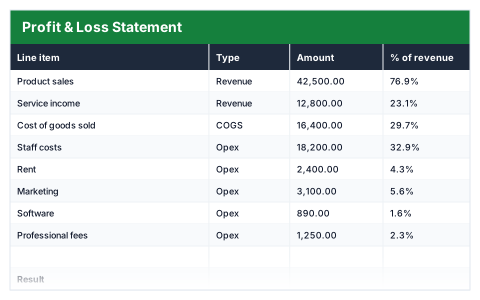
Gross and net margin calculated from your own line items, each shown against revenue.
- Live formulas
- 15
- Columns
- 4
- File
- 8 KB
$5
Checkout opening soonOr get it with all 66 paid templates in the complete pack — $45.
Works in Excel 2013 and later, Microsoft 365, Google Sheets and LibreOffice Calc. Set up to print on one page wide.
About this Profit & Loss Statement template
A profit and loss statement shows whether a business actually made money over a period. This Excel P&L template takes your own line items, each tagged as revenue, cost of goods sold or operating cost, and works out gross profit, net profit and both margins.
Every line is also shown as a percentage of revenue, so you can see at a glance which costs are eating into profit.
Good for
- →Small businesses producing a monthly or yearly P&L
- →Checking gross margin before changing prices
- →Preparing figures for an accountant or lender
What it works out for you
Result
- →Total revenue
- →Cost of goods sold
- →Gross profit
- →Gross margin
- →Operating costs
- →Net profit
- →Net margin
What you fill in
The table has 4 columns. Calculated columns fill themselves in; the rest are yours to type over.
- →Line item
- →Type
- →Amount
- →% of revenue
How to use it
Tag every line Revenue, COGS or Opex using the dropdown — the margins depend on it.
The file opens with sample rows so you can see every formula working before you change anything. Type your own figures over them. When you need more rows, insert them inside the existing block rather than underneath it, so the totals keep covering every row.
Functions it uses
Every one of these exists in Excel, Google Sheets and LibreOffice, so the file behaves the same wherever you open it.
IFERRORSUMIFQuestions about the Profit & Loss Statement
What is the difference between gross and net profit?
Gross profit is revenue minus the direct cost of what you sold. Net profit also takes off operating costs such as rent, wages and software.
Why does every line need a Type?
The totals are built with SUMIF on the Type column. A line tagged Revenue, COGS or Opex lands in the right total; an untagged line is left out.
Is this a statutory set of accounts?
No. It is a management P&L for understanding your numbers. Formal accounts are still prepared by your accountant.